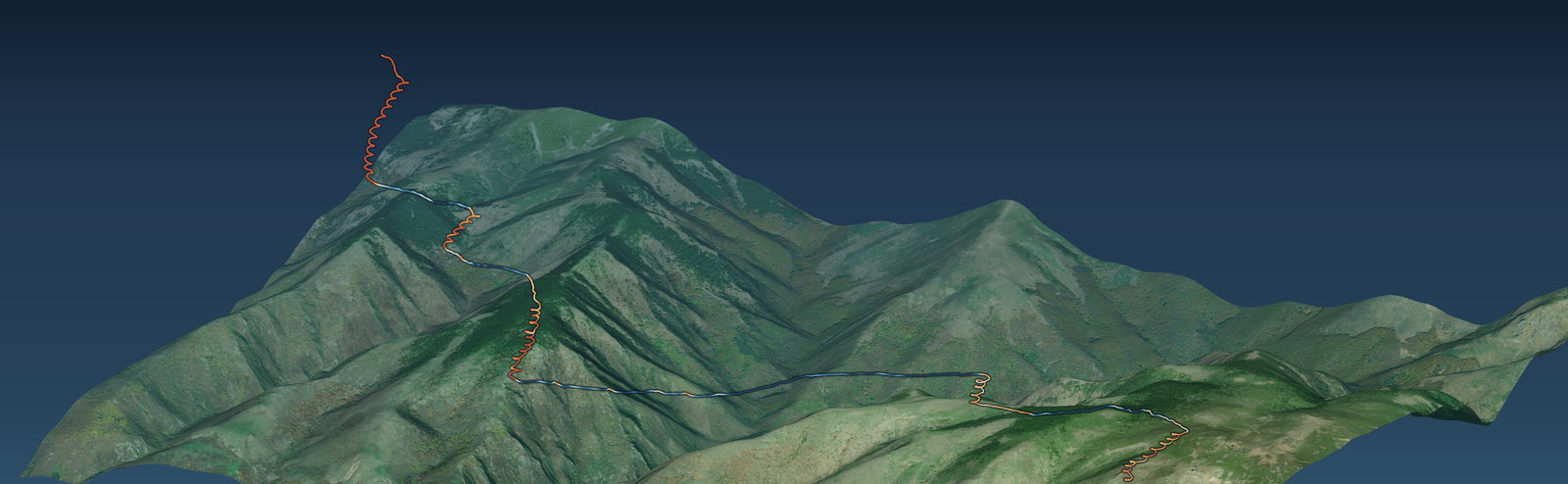
One real flight
217 kilometres, and he landed in the field he took off from.
A beta pilot flew out 66.6 km along a ridge, turned, and flew home — on a day with almost no wind to help in either direction. Every kilometre came out of climbs he found himself. This is the record his ParaBaro brought back.

airborne without a break
from launch at the furthest point
his highest point of the day
separate climbs, worked one after another
One flight, flown by one pilot on one wing. Our evidence base is still small, and we say so.
How it works
Three steps. Nothing to watch in the air.
Fit four modules to your wing
Two magnet-coupled pairs, one on each side, held through the fabric. Nothing is modified, and they can stay fitted between flights.
Fly as you always do
The ParaBaro Bridge, a small unit with no screen, records the pressure inside your wing together with your GPS track.
Read it back after you land
Your track and the pressure on each side of your wing, flight by flight, on your pilot dashboard.
It is a recorder, not an instrument. It gives no warnings in flight. Fly your normal instruments and your normal judgement.
Pilot beta
Fly it in the 50-pilot beta
Beta testers pay £199 including VAT, once. The regular price of the same unit is £395 including VAT. It is yours on delivery: no subscription, nothing to fly off.
Apply for the betaParaGuru
Ask ParaGuru
ParaGuru answers paragliding questions — technique, weather, equipment, sites — from a curated knowledge base. Three questions free with no account, and built on the same data platform as ParaBaro.